Artist's Statement

My sculptures are made from rusty barbed wires that are many decades old.
Barbed Wire is an American invention from late 1800’s, designed as fence material that would hurt any body coming into contact with it.
(Today we find this nasty wire in other contexts - despicable places like migrant camps, prisons, etc.)
Barbed wires are powerful, thin jagged lines in space that have had a significant but detrimental impact upon the American West.
These wires began to be installed when political belief was that the land, Native peoples and indigenous wildlife needed to be controlled or eliminated altogether.
Barbed wire physically altered Western landscape by confining imported animals who destroyed native plants, disrupted migration paths of indigenous wildlife,
and blocked access to Native peoples who had roamed freely on the land with spiritual reverence for thousands of years.
The rusty old wires I use are witnesses to this transformation, giving them story telling energy.
My sculptures have organic personalities. They combine and contrast cruel industrial wire with natural materials of bones, feathers, animal hair.
I hope these sculptures open thought lines about respect for land & all living beings, and inspire humane resolutions to conflicts.
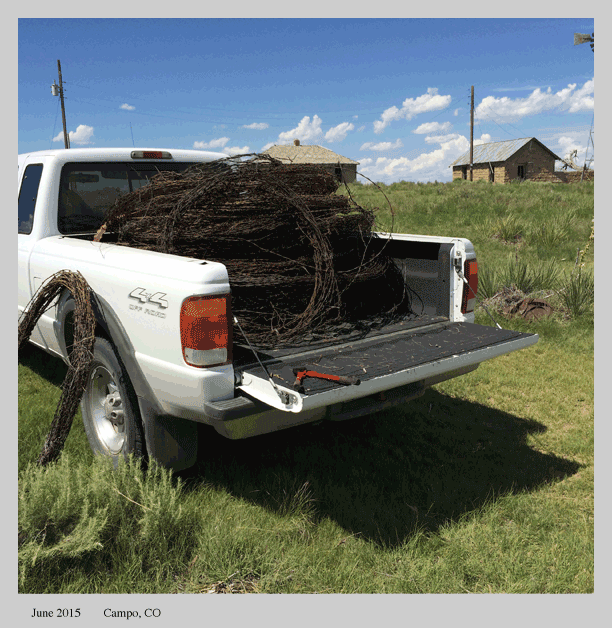
My first truck-full of rusty barbed wire came from the Estes Park area in 1991. Since then, I have rounded up truckloads of rusty barbed wire from Southeastern Colorado, where long-time drought resulted in abandoned homesteads,
and from the Hotchkiss/Paonia area, where orchards and fields of hops have replaced a preference for livestock on the land. Other truckloads have come from Salida and Northeastern Colorado.


